|
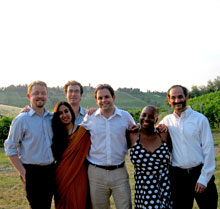
Cameron Chisholm沒浪費任何時間去決定他將如何提供他人他在擔任2006-08年度扶輪和平獎學生所獲得的技能。在衣索比亞實地考察期間,他起草了一份一個倡導和平組織的計劃。
Cameron Chisholm didn’t waste any time
deciding how he would provide others
with the skills he was gaining as a
2006-08
Rotary Peace Fellow. During his
fieldwork in Ethiopia, he drafted a plan
for a peace advocacy organization.
“我一直在研究的早期預警系統和衝突,我以為我早就想通了,由美國德州克Corpus
Christi扶輪社贊助前往英國布拉德福德大學學習的Chisholm說。”當我到阿地斯阿貝巴(衣索匹亞首都)時,我才意識到這無法事先準備,特別是處裡一個不符合經驗法則的衝突。“
“I had been studying early conflict
warning systems and thought I had it
figured out,” says Chisholm, who studied
at the University of Bradford, England,
sponsored by the Rotary Club of Corpus
Christi, Texas, USA. “I realized when I
got to Addis Ababa that it wasn’t so cut
and dried -- you are dealing with
communities in conflict facing issues
that do not fit into a cookie cutter.”
Chisholm說在擔任和平獎學生期間,混合、應用理論並實踐,是建立他自己計畫的催化劑。
The fellowship’s mix of practical and
theoretical application, says Chisholm,
was the catalyst for establishing his
own program.
“我問自己,我如何為他人創造一個可以讓他們真實體驗這些的機會,“Chisholm說。
“I asked myself how I could create this
for other people to allow them to
experience these things,” Chisholm says.
2009年,在世界銀行擔任全球安全觀察與分析主管時,Chisholm創辦了國際和平與安全研究所(IPSI),總部設在華盛頓特區,以提高公眾對於和平及安全問題的意識。
In 2009, while working as a global
security analyst and watch officer for
the World Bank, Chisholm founded the
International Peace and Security
Institute (IPSI), based in
Washington, D.C., to raise public
awareness of peace and security issues.
與約翰斯霍普金斯大學合作,IPSI在義大利的博洛尼亞於6至7月舉辦了為期一個月的專題討論會,有55人出席,其中包括三個扶輪和平獎學生。來自
28個國家的學生和從業人員,向現任和前任的代表從聯合國、國際刑事法院、其他機構和政府單位,學習調解和維和技術。
In cooperation with Johns Hopkins
University, IPSI hosted a month long
symposium in Bologna, Italy, in part of
June and July, attended by 55 people,
including three Rotary Peace Fellows.
Students and practitioners from 28
countries learned mediation and
peacekeeping techniques from current and
former representatives of the United
Nations, International Criminal Court,
and other institutions and governments.
“雖然我曾參與解決衝突的訓練,我從來沒有接觸過這樣全面的模擬和角色扮演,
2009-11和平獎學生Katharine
Mote說“。”在會議期間,他們給了我機會讓我實踐在這次和之前所學到的技能。“
“Although I had participated in conflict
resolution trainings, I had never been
exposed to such comprehensive
simulations and role playing,” says
2009-11 peace fellow Katharine Mote.
“They gave me the opportunity to
practice skills I had learned both prior
to and during the symposium.”
莫特說,她也非常讚賞讓從不同的地理區域的學生有機會了解如何建設和平。
Mote says she also appreciated the
opportunity to learn how students from
different geographical areas
approach peace-building.
“儘管在教室中培訓,感受就有如在課堂外,“Chisholm說,他負責審核與邀聘從衝突中與衝突後的國家來的和平工作者中,擔任本次主講者和與會者。
“As much training went on outside of the
classroom as in it,” says Chisholm, who
recruited instructors and approved the
attendees, including peace workers from
conflict and postconflict countries.
學員們還收到一項指示-用企業家精神的原則來促使社會變革-並邀請提交建議書申請撥款。IPSI榮獲創立興建學校的非盈利性的組織加拿大Craig
Vandermeer贊助,因為他的提案,將提供烏干達南部職業學校的畢業生小額貸款和並可獲得當地企業後續諮詢顧問,此舉明年夏天即將開始。
Participants also received instruction
on social entrepreneurship -- using
entrepreneurial principles to make
social change -- and were invited to
submit proposals for funding. IPSI
awarded funding to Canadian Craig
Vandermeer, founder of the nonprofit
Schools Building Schools, for his
proposal to provide graduates of
vocational trade schools in southern
Uganda with microloans and follow-up
consultation with local business
advisers starting next summer.
“我能夠與許多在這領域的專業人士互動,他們對如何創造一個成功的計畫提供了我意見諮詢,“Vandermeer說。
“I was able to network with many
professionals in the field, who provided
advice on how to move forward and create
a successful project,” Vandermeer says.
IPSI將提供2012年每年將為博洛尼亞專題討論會增加一個在海牙為期四周的國際和過渡時期司法課程。Chisholm也希望加入區域研討會,圓桌討論和解決衝突的系列演說。
IPSI will offer the Bologna symposium
annually and in 2012 will add a
four-week program in The Hague focusing
on international and transitional
justice. Chisholm also hopes to add
regional symposiums, roundtable
discussions, and a speaker series on
conflict resolution.
|