扶輪分享園地
SHARE ROTARY
分享智慧、分享理念、分享經驗
永恆的樂觀者
The Eternal Optimist
文:雷根總統夫人南茜
By Nancy Reagan
譯者:國際扶輪第3500地區前總監劉健德PDG CT

|
扶輪分享園地 SHARE ROTARY 分享智慧、分享理念、分享經驗
|
永恆的樂觀者 The Eternal Optimist 文:雷根總統夫人南茜 By Nancy Reagan 譯者:國際扶輪第3500地區前總監劉健德PDG CT |
|
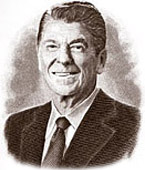 我想他們打破模式而造出了雷根。他是一位很有原則及完整人格的人。他完全沒有自大感,且對自己感到很自在。因此,他不覺得他必須向任何人證明任何事。他說出自己的想法和自己的理念。他可以是一位體育播報員,一位電影電視演員,可以擔任八年美國最大州的州長,然後是一位在職八年的總統,而且仍然保持同樣傑出的男人。這可能是得助於他堅定不移的宗教信仰。雷根一直相信,上帝對每一個人都有一項安排,我們現在可能不知道是什麼,但是終究我們會瞭解。
I think they broke the mold when they made Ronnie. He was a man of strong principles and integrity. He had absolutely no ego, and he was very comfortable in his own skin; therefore, he didn’t feel he ever had to prove anything to anyone. He said when he thought and believed. He could move from being a sportscaster to moving pictures and TV, to being Governor of the largest state in the country for eight years and then to being President for eight years, and somehow remain the same wonderful man. Perhaps, this was helped by his strong, unshakable religious beliefs. Ronnie always believed that God has a plan for each of us and that we might not know what it is now, but eventually we will.
他搭飛機或下飛機時,一定會從窗戶往外看作默禱。我想很多人都不知道這件事。他是永遠的樂觀者—玻璃杯的水永遠是半杯滿,而不是少半杯。
He never took off or landed in a plane without looking out the window and saying a silent prayer. I don’t think many people knew this. He was the eternal optimist-the glass was always half full, not half empty.
我想他的信仰及他的自在,就是來自樂觀。他覺得任何事情的發生,一定有它的理由。因此,他從不看事情的黑暗面。在他遭受槍傷且幾乎失去生命,他躺在病床上,看著天花板並禱告。他告訴我,他了解他不能只為他自己禱告,那是不對的,他也必須為辛克雷禱告。辛克雷的雙親,曾寫信向他致意,他也寫了優美的回函。
I think his faith and his comfort with himself accounts for that optimism. Since he felt that everything happens for a reason, he never saw things darkly. After he was shot and we almost lost him, he lay on the bed staring at the ceiling and praying. He told me that he realized he couldn’t pray just for himself, that it wouldn’t be right, and that he also had to pray for John Hinckley. Hinckley’s parents sent him a note and he wrote a nice one back to them.
後來,庫克主教到白宮拜訪雷根時,說到﹕〝上帝在那一天一定是坐在您的肩膀上。〞雷根回答說:〝是的,我知道。我已決定把我所有剩餘的日子全屬於上帝。〞
Later, Cardinal Cooke visited Ronnie in the White House and said, “God was certainly sitting on your shoulder that day.” Ronnie replied, “Yes, I know, and I made up my mind that all the days I have left belong to Him.”
雷根是一位非常平民化的人,但是也是善於社交的人。他喜歡看到及與朋友接觸。跟他結婚52年,我有許多的回憶。他是非常有感情,具浪漫及溫柔的人。在我的生日,他一向送花給我母親,感謝她養育我,同時在我們必須分開時,他會寫美妙感人的信給我。
Ronnie was a very private man but also gregarious, and he loved seeing and meeting people. After being married to him for 52 years, I have so many memories. He was very sentimental and romantic and tender. On my birthdays, he always sent my mother flowers to thank her for having me, and he wrote me beautiful touching letters when we had to be apart.
很久以前,他出去散步,路過一家門前種有玫瑰花。他彎腰摘下一朵,安全人員提醒他,這不是他的家。他顯出困惱的說:〝但是我想要送給我的夫人。〞他拿著花,帶回家送給我。
Some time ago, he went for a walk and passed a house with roses in front. He bent over to pick one, and the Secret Service agent reminded him it wasn’t his house. He looked stricken and said, “But I want to give it to my lady.” He picked it and brought it home to me.
您沒有辦法不談到雷根風趣的幽默感。我想他可以整天講故事且不會重覆—給朋友高興,他也應用於政治上。如果事情進行到有一些激烈和緊迫,他會以故事來化解緊張,當他講完後,整個場面隨即改變,他們可以毫無抱怨的繼續討論事情。
You cannot talk about Ronnie without mentioning his wonderful sense of humor. I think he could tell stories all day without repeating himself—a joy for people with him, but he also made use of it politically. It things got a little heated and tense, he would break the tension with a story. By the time he ended, the mood would have changed, and they got on with the business with no rancor.
雷根常告訴他的子女:〝如果您走進一家商店,感到服務生對您不禮貌,請想一想可能他那天工作很煩,如果您是他的話。〞我記得他曾對他的兒子說:〝一位紳士永遠要做善良的事。〞是的,雷根可能很固執—但永遠保持笑容。
Ronnie always told his children, “If you go into a store and feel the clerk is being rude, stop and think that she may have a tough day, and put yourself in her shoes.” I remember that he told his son, “A gentleman always does the kind thing.” Yes, Ronnie could be stubborn—but always with a smile.
他深受原則的指引,而了解到蘇聯的體制是錯誤的。當我們到柏林訪問時,站在看台上,看到另外的一邊時。給我們非常深刻的印象,街道上竟然沒有任何一個人,我們想到這很離奇且困惑。當我們到查理檢查站時,雷根看到人民不得越界的警戒線,他起腳踏過去。他覺得堅持正確方向是重要的。他會非常堅持甚至生氣,當他的顧問要把他所相信的一段話,從講詞中刪除。就是在那次柏林之旅時,他站在圍牆前說:〝柯巴契夫先生,拆掉這道牆吧。〞
He was deeply guided by the principle that the Soviet system was wrong. It made a tremendous impression when we went to Berlin and stood on a balcony to see the other side. There was not a soul on the street, and we thought how eerie and disturbing that was. When we went to Checkpoint Charlie, and Ronnie was shown the line that people couldn’t cross, he took his foot and put if over the line. He felt it was important to assert what was right. He got very stubborn and even mad when his advisers would take out a line he really believed from a speech. It was on that trip that he stood in front of the Berlin Wall and said, “Mr. Gorbachev, tear down this wall!”
雷根認為他最大的成就—和平結束冷戰。另一項偉大的贈與,他認為,是帶給國家重現樂觀。
Ronnie felt this was his greatest accomplishment—finding a safe ending to the cold war. And his other great legacy, he felt, was giving our country back its optimism.
在我們最後參加於甘迺迪中心舉行的致敬晚會,華特克朗凱最後上台,並帶領所有演員及工作人員向我們敬禮。那時,走道上都擠滿了服務人員,他講了一段感人的致謝詞。這時所有觀眾轉向我們,面對著我們,唱出 Auld Lang Syne. 昔日,往日,美好的時光。當時我感動的流淚,但是雷根鎮靜的說:〝勝過得到奧斯卡獎。〞只有雷根能做到。
At our last Kennedy Center Honors Show, Walter Cronkite went back onstage at the end and brought out all the cast, performers, and crew to salute us. By this time, the aisles were filled with ushers, and he gave a very touching tribute. The audience then turned, faced us and sang Auld Lang Syne. I had dissolved into tears by that time. But Ronnie calmed down, “Beats getting on Oscar.” Only Ronnie could do that.
當我們最後正要離開白宮,走向直昇機,他帶著溫馨的微笑對我說:〝好了,這是非常美好的八年,總而言之,不錯,確實不錯。〞
When we were leaving the White House for the last time and walking toward the helicopter, he turned to me with his heart-warming grin. “Well, it’s been a wonderful eight years,” he said. “All in all, not bad. Not bad at all.”